

AI TRAINING · A HARBOUR CRUISE OPERATOR
Eighteen people, ten departments, one shared standard for how AI gets used across the organisation.
3 role-based workshop days, designed from a 12-department audit
18 people certified, from maintenance and marine to finance and the executive team
Every participant left with a working AI setup and a reusable Skill built on a real task from their own role
Weeks later, reported publicly by the client: the team using AI more, sharing wins, and a real shift in the day to day
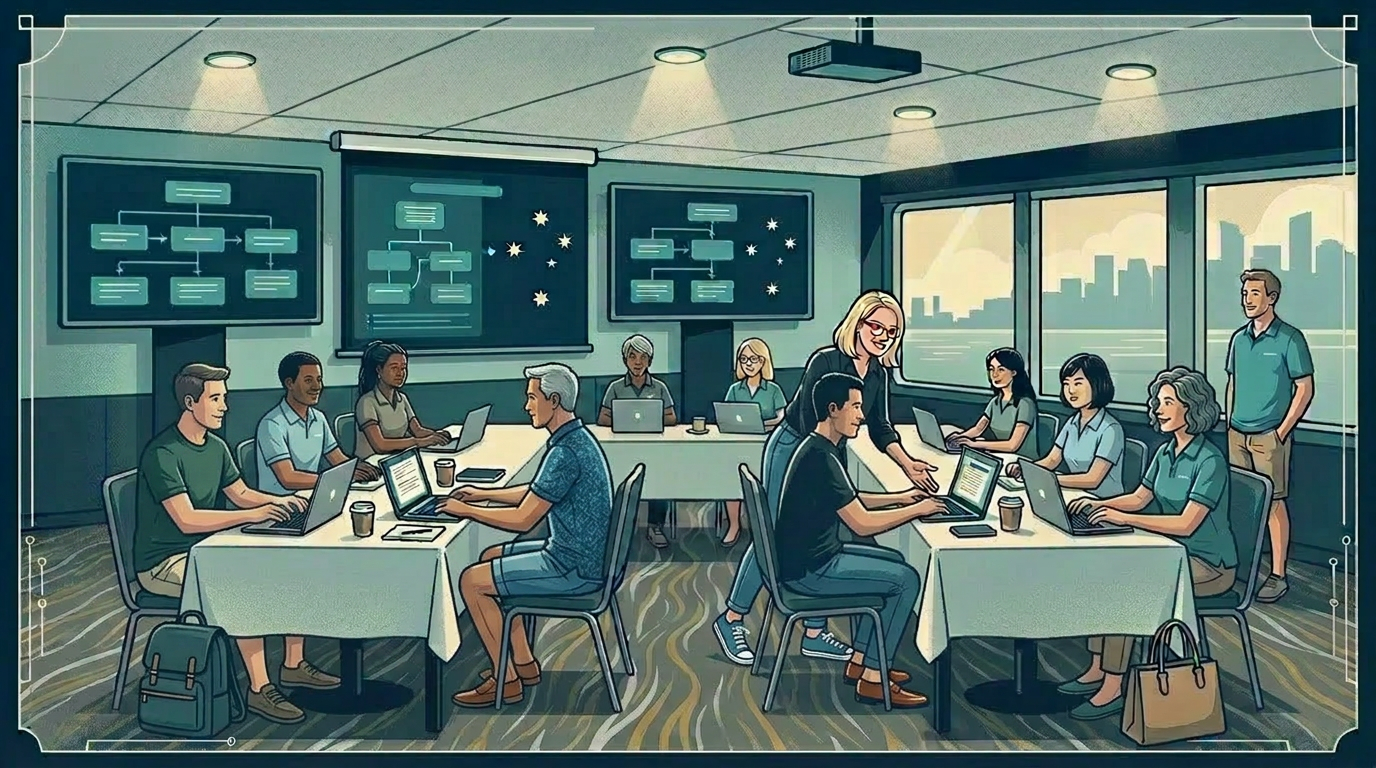
Three role-based workshop days for a shoreside team, designed from a twelve-department audit and taught on the platforms the organisation had already sanctioned.
A harbour cruise operator. A shoreside team across ten departments, from maintenance and marine to finance, reservations, charter sales, hospitality, logistics, people and culture, and the executive team. Sanctioned AI platforms already in place. A few confident daily users, many who had barely touched them, and no shared standard for what good use looked like.
Southern Sky AI ran a twelve-department audit and designed three role-based workshop days from what came back. Day one: admin, operations, finance and support services working in Claude. Day two: the same cohort in ChatGPT Business. Day three: the executive team across the full platform landscape and when to reach for which tool. Every day ran the same four-stage architecture: orient, personalise, codify, practice.
The data rule came before anything went into a platform: passenger and crew personal data stays out. The CHART quality method travelled with every participant: chart the task, hand over clearly, assess the output, refine through the turn, and track and govern.
Eighteen people certified across ten departments. Every participant left with a working setup in the sanctioned platform, personal styles and memory configured, at least one reusable Skill built on a real task from their role, and a certificate carrying a public verification page. Weeks later the client reported publicly that the team is using AI more, sharing wins with one another, and there has been a real shift in how they approach it day to day.
The Organisation
A harbour cruise operator. A shoreside team across ten departments, from maintenance and marine to finance, reservations, charter sales, hospitality, logistics, and people and culture, alongside the executive team. Sanctioned AI platforms already in place, with adoption uneven across the organisation.
The Situation
A few confident daily users, many who had barely touched AI, and no shared standard for what good use looked like. Different departments doing different things, at different quality bars, on the same tools. Leadership wanted the organisation on one footing before capability spread further on its own.
The Work
Twelve-department audit. Interviews across every function to surface the tasks the team actually does, the tools already in use, and where AI would earn its keep against real tasks.
Three role-based workshop days designed from the audit. Day one: admin, operations, finance and support services working in Claude. Day two: the same cohort in ChatGPT Business. Day three: the executive team across the full platform landscape and when to reach for which tool. Every day ran the same four-stage architecture: orient, personalise, codify, practice.
The data rule came first: passenger and crew personal data stays out. The CHART quality method taught as the shared standard across every cohort: chart the task, hand over clearly, assess the output, refine through the turn, and track and govern.
The Outcome
Eighteen people certified across ten departments. Every participant left with a working setup in the sanctioned platform, personal styles and memory configured, at least one reusable Skill built on a real task from their role, a shared prompt library, and a certificate carrying a public verification page at southernsky.ai/verify.
Weeks later the client reported publicly that the team is using AI more, sharing wins with one another, and there has been a real shift in how they approach it day to day.
The Standard Applied
Training designed from an audit of what the team actually does, taught on the platforms the organisation has sanctioned, anchored by a data rule set before anything goes into a tool, and carried home by a shared quality method the organisation keeps after the days end. The certificate is verifiable. The standard is the same across every department.
Related from the Log Book